Definition
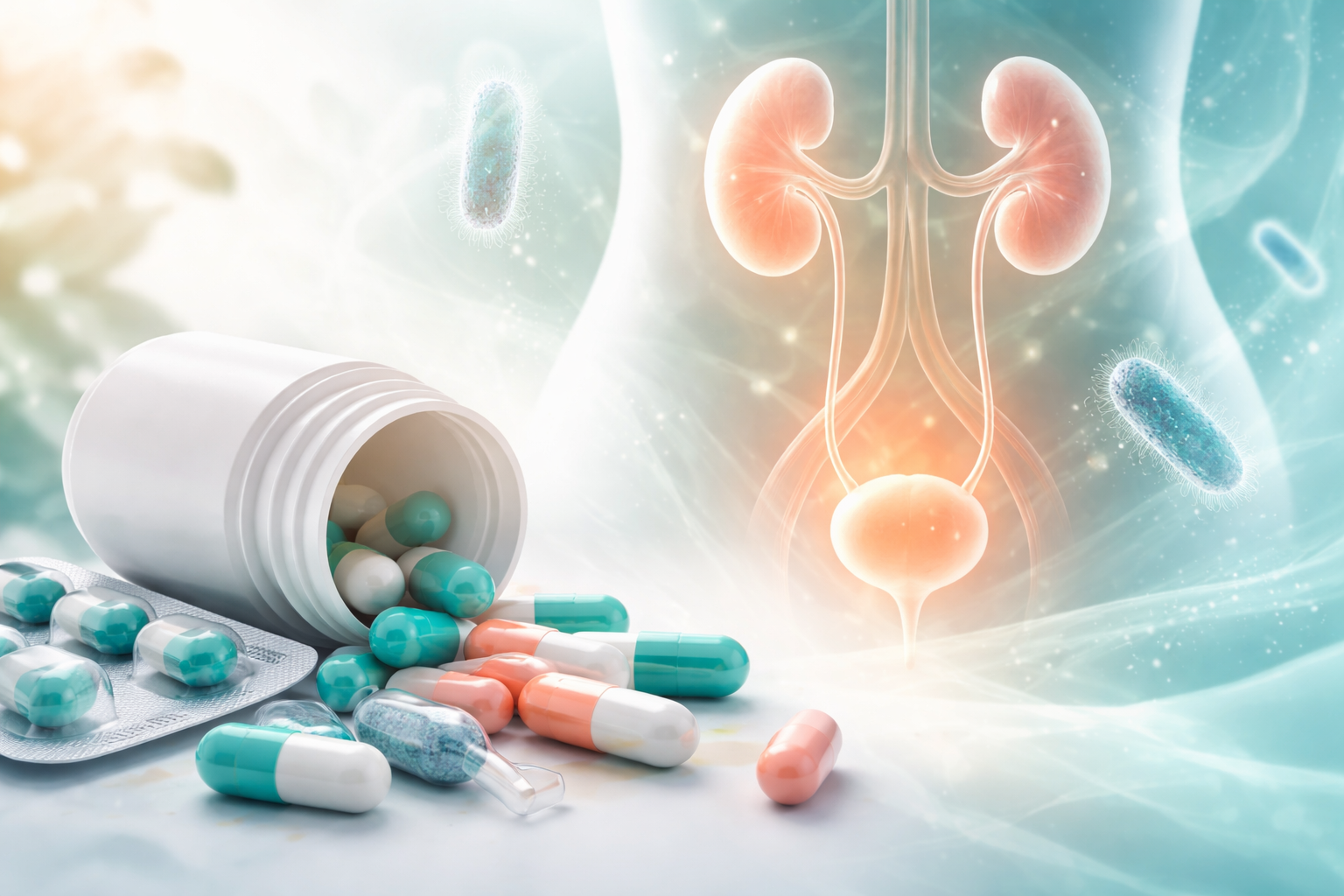
Antibiotics for urinary tract infections (UTIs) are medicines aimed at eliminating bacteria responsible for infections of the urinary tract. These infections most commonly affect the bladder (cystitis), but they may also involve the urethra, the ureters, or the kidneys. The bacteria responsible for such infections come from the gastrointestinal flora, Escherichia coli in particular, which colonises the urethra and subsequently ascends the urinary tract.
Antibiotics act by blocking essential mechanisms for bacterial survival. Some prevent the synthesis of the cell wall, while others inhibit protein production or bacterial DNA replication. This action either destroys the bacteria or stops their multiplication, allowing the immune system to complete the elimination of the bacteria responsible of the infection.
The choice of antibiotic depends on several factors, including the type of urinary tract infect, patient’s sex or age, the bacteria suspected and local patterns of bacterial resistance. Medicines such as fosfomycin, nitrofurantoin or some beta-lactams are often prescribed for uncomplicated UTIs.
Origin and context of use
The use of antibiotics to treat urinary tract infection dates back to the mid-20th century, when the first antibacterial medicines were introduced into clinical practice. Before their availability, UTIs could turn into severe complications, such as renal complications or septicaemia.
The discovery of different classes of antibiotics allowed to adapt treatments according to the bacteria responsible for the infection and the location of the infection. Urinary tract infections are now among the most common bacterial infections in general practice, especially in women because of a shorter urethra making it easier for bacteria to ascend the urinary tract.
Medical guidelines have evolved to limit the excessive use of antibiotics and reduce the development of bacterial resistance. Current protocols favour short and targeted treatments based on microbiological and epidemiological data.
How does it work?
Antibiotics used in urinary tract infections target essential biological functions of bacteria. Their mechanism of action varies according to the pharmaceutical class.
Some antibiotics, such as beta-lactams, inhibit the synthesis of the bacterial cell wall. The cell wall guaranties the rigidity of the cell and protects it against osmotic pressure. When its synthesis is blocked, the bacteria become fragile and eventually break.
Other medicines act on bacterial proteins production. Antibiotics from this group bind to bacterial ribosomes and prevent the translation of messenger RNA. Without functional proteins, bacteria cannot hold its metabolism and cannot reproduce.
Some medicines, such as fluoroquinolones, disrupt bacterial DNA replication by inhibiting key enzymes involved in the organisation of genetic material. This blocks cellular division.
In the special cases of UTIs, several antibiotics have pharmacokinetic properties: they are highly concentrated in urines after administration. This high concentration allows them to reach immediately bacteria in the bladder or urinary tract, improving the treatment effectiveness.
When are they used?
Antibiotics are prescribed when a bacterial urinary tract infection is confirmed or strongly suspected. The most common infection is acute uncomplicated cystitis, characterised by burning sensation during urination, increased urinary frequency and sometimes suprapubic pain.
They are also used for complicated urinary tract infections which occur in some at-risk populations. These include older people, men, patients with urinary catheters or people with anatomical abnormalities of urinary tract.
In more severe cases, such as acute pyelonephritis, the infection reaches kidneys. Antibiotic treatment becomes longer and may require intravenous administration.
In pregnant women, urinary tract infection must be treated systematically to prevent maternal and foetal complications.
Benefits and aims
Antibiotic treatment aims to achieve several medical objectives in the management of urinary tract infections:
✓ Eliminate the bacteria responsible for the infection
✓ Ease urinary symptoms rapidly
✓ Prevent the infection from spreading to the kidneys
✓ Reduce the risk of systemic complications such as septicemia
✓ Limit the likelihood of recurrence with appropriate treatment
In most cases of uncomplicated cystitis, symptoms improve significantly within 24 to 48 hours following the beginning of the treatment. Microbiological cure usually occurs within a few days.
The use of targeted antibiotics also allows to reduce dependance to broad-spectrum agents, which takes part in the global strategy to control antimicrobial resistance.
Risks, limits and controversies
The use of antibiotics in urinary tract infections has some limitations. The main concern is the development of antibiotic resistance. When bacteria become resistant to antibiotics, standard treatments lose effectiveness and stronger antibiotics may be required.
Antibiotics may also cause adverse effects. Digestive disorders, such as nausea or diarrhoea, are the most common. Some medicines may also trigger allergic reactions or disrupt normal microbiota.
Another issue concerns non-bacterial symptoms or irritative cystitis, in which antibiotics provide no benefits. Inappropriate prescription expose patients to unnecessary side effects and contribute to the development of antimicrobial resistance.
Research and innovations
Current research focuses on several areas aimed at improving the management of urinary tract infections. The main objective is to develop new antibiotics capable of acting against multidrug-resistant bacteria.
Alternative strategies are also studied. Vaccines targeting some strains of Escherichia coli are under development to prevent recurrent UTIs.
Researchers also investigate non-antibiotics strategies, such as bacteriophages. These viruses specifically attack bacteria and can destroy them without disrupting normal bacterial microbiota.
The improvement of rapid diagnostic tests is another very active field of research. Molecular diagnostic methods can identify the bacteria responsible and its resistance profile faster, enabling more targeted treatment.
Frequently asked question
Are antibiotics always necessary to treat urinary tract infection?
No, they are not. Some UTIs aren’t severe and may resolve spontaneously. The decision depends on the severity of symptoms, the presence of bacteria in urines and the patient’s risk profile. Doctors assess the risk of complications before prescribing antibiotics.
How long does it take to treat cystitis?
Treatment usually last from a single dose to three days depending on the antibiotic used to treat uncomplicated cystitis. Complicated or renal urinary tract infections require longer treatment, lasting from 7 to 14 days.
Why are urinary tract infections more common in women?
The female urethra is shorter than the male urethra and it is closer to the anus. As a result, intestinal bacteria can reach the bladder more easily, increasing the risk of infection.
What happens if we stop the treatment too early?
Stopping the treatment prematurely may allow some bacteria survive. These bacteria can multiply again and cause a recurrence of the infection. It also favours the rise of antibiotic-resistant bacteria.
What are the typical symptoms of a urinary tract infection?
The most common symptoms include a sensation of burning while urinating, increased urinary frequency, cloudy or foul-smelling urine and suprapubic pain. Fever and lower back pain may indicate a renal infection.
Do antibiotics act immediately?
Bacteria start to be inhibited soon after the medicine is taken. Symptoms often improve within 24 to 48 hours, but the treatment must be completed to ensure complete eradication of the infection.
Can urinary tract infections be prevented?
Some measures can reduce the risk of infection, such as drinking adequate amounts of water, urinating regularly, avoiding holding urine for long periods and adopting an appropriate intimate hygiene. Specific medical strategies may be recommended in people prone to recurrent infections.
Can antibiotics cause vaginal infections?
Yes, they can. By modifying normal bacterial microbiota, some antibiotics may favour the proliferation of yeasts such as Candida, which is responsible of vaginal mycoses.
Are all urinary tract infections bacterial?
The majority of infections are of bacterial origin. However, irritations, urinary stones or some inflammatory diseases may cause similar symptoms without a true bacterial infection.
When should medical advice be sought quickly?
Prompt medical consultation is recommended in cases of high fever, lower back pain, nausea, vomiting or during pregnancy. These signs may show a more severe infection requiring urgent medical treatment.
Key points
Antibiotics are the main treatment for bacterial urinary tract infections. They act by inhibiting crucial mechanisms responsible for bacterial survival, most commonly targeting Escherichia coli. The choice of medicine depends on the types of infection and the patient’s profile. Short treatments are preferred for uncomplicated cystitis. Careful and appropriate use of antibiotics is essential to limit the rise of bacterial resistance. A precise diagnosis and the respect of the duration of the treatment contribute to a quick recovery and prevent complications.
Related Longevity Concepts
Scientific context
Field: Clinical medicine, biology, and preventive health
Biological process: Human physiology, pathology, and health-related mechanisms
Related systems: Metabolic, immune, cardiovascular, nervous, and cellular systems
Relevance to longevity: Understanding medical terminology and biological processes helps clarify how diseases, symptoms, biomarkers, and treatments influence long-term health, prevention, and healthy aging.