
Definition
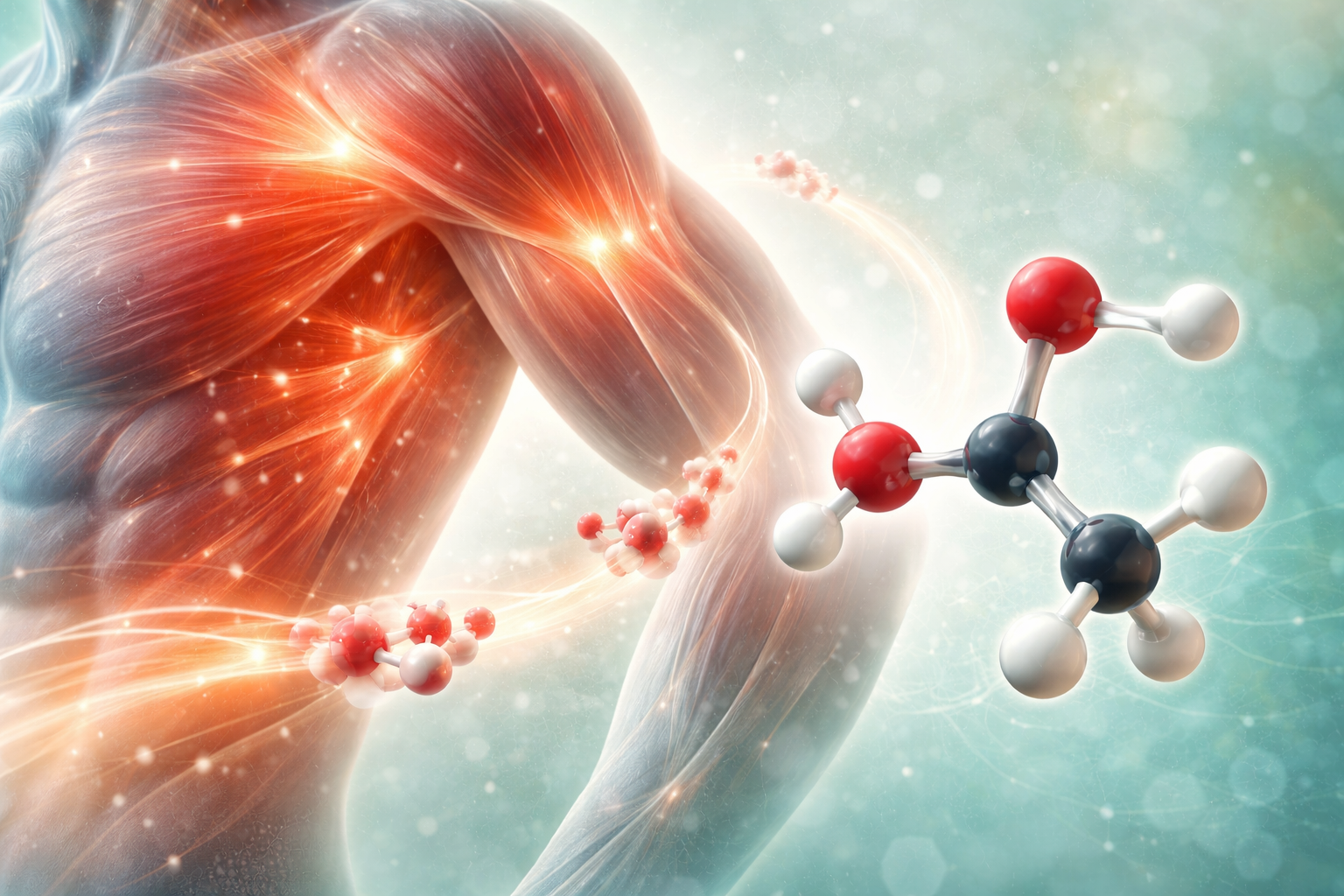
Lactic acid is an organic compound produced naturally in the body during anaerobic metabolism. It is a byproduct of glucose breakdown when oxygen supply is insufficient for complete aerobic respiration. Chemically, it belongs to the class of alpha-hydroxy acids (AHAs) and exists in two forms, L-lactic and D-lactic acid, with the L-form being predominant in human metabolism.
Lactic acid is primarily generated in skeletal muscles during intense exercise. When the energy demand exceeds oxygen availability, pyruvate produced in glycolysis is converted into lactate to regenerate NAD⁺, allowing glycolysis to continue. Lactate can then accumulate in the blood, a condition often associated with muscle fatigue and transient burning sensations.
Beyond energy metabolism, lactic acid participates in various physiological processes, including pH regulation, signaling pathways, and as a substrate for gluconeogenesis in the liver. It is also synthesized by certain bacteria and is widely used in industrial and medical applications.
Origin and context of use
Lactic acid is produced naturally in the human body and also by lactic acid bacteria, which ferment sugars in dairy and plant products. In human physiology, its production is part of the normal metabolic response to oxygen-limited conditions, especially in muscles during high-intensity exercise.
Historically, lactic acid was first isolated from sour milk in the 18th century. Its physiological significance became clearer in the 20th century with studies linking lactate accumulation to muscle fatigue and metabolic processes.
In sports medicine, understanding lactic acid accumulation has informed training strategies, recovery protocols, and nutritional approaches. In industry, it is used in food preservation, cosmetics, biodegradable plastics, and pharmaceuticals.
How does it work?
During glycolysis, glucose is broken down into pyruvate. Under aerobic conditions, pyruvate enters mitochondria for complete oxidation via the Krebs cycle. When oxygen is limited, pyruvate is converted into lactate by the enzyme lactate dehydrogenase, regenerating NAD⁺, which is essential for glycolysis to continue producing ATP.
Accumulation of lactate in muscle cells leads to an increase in hydrogen ions, slightly lowering intracellular pH. This acidosis contributes to the sensation of muscle fatigue and temporary discomfort during intense exercise. However, lactate itself is not the primary cause of long-term muscle soreness.
Lactate is transported from muscles to the liver via the bloodstream, where it can be converted back to glucose in a process called the Cori cycle. This recycling helps maintain energy homeostasis during sustained physical activity.
Additionally, lactate functions as a signaling molecule. It can influence gene expression, stimulate angiogenesis, and interact with the nervous system to modulate metabolic responses.
In which cases is it used?
Lactic acid has multiple applications in both physiological and industrial contexts:
-
In exercise physiology, monitoring lactate levels helps evaluate muscle fatigue, aerobic and anaerobic thresholds, and training adaptations.
-
In medicine, lactate measurements in blood are used to assess conditions such as sepsis, hypoxia, and metabolic disorders.
-
In food industry, it acts as a preservative and flavoring agent, notably in fermented products like yogurt and sauerkraut.
-
In cosmetics, lactic acid is used for skin exfoliation and pH adjustment.
-
In bioplastics, it serves as a precursor for polylactic acid (PLA), a biodegradable polymer.
Benefits and objectives
Lactic acid plays several important roles in metabolism and applied contexts:
✓ Provides rapid ATP generation under low-oxygen conditions
✓ Serves as a substrate for gluconeogenesis in the liver
✓ Acts as a signaling molecule influencing gene expression and angiogenesis
✓ Helps regulate pH in tissues and blood
✓ Used industrially in food preservation, skincare, and biodegradable plastics
In sports, monitoring lactate accumulation allows athletes to optimize training intensity and recovery. In medicine, elevated lactate levels can serve as an early marker of metabolic stress or tissue hypoxia.
Risks, limits or controversies
Excessive lactic acid accumulation in the blood, or lactic acidosis, can occur in severe conditions such as sepsis, shock, or liver dysfunction. This leads to significant pH imbalance, which can be life-threatening if untreated.
In exercise contexts, transient lactate build-up is normal and typically resolves rapidly after activity. Some misconceptions persist, including the belief that lactic acid is responsible for delayed onset muscle soreness; research shows DOMS is primarily due to microtrauma and inflammation rather than lactate.
Industrial use of lactic acid must consider proper handling, as concentrated solutions can cause skin or eye irritation. Its efficacy and safety in medical and cosmetic applications depend on controlled concentrations.
Research and innovations
Recent research explores the diverse roles of lactate beyond anaerobic metabolism. Studies highlight its function as a signaling molecule in the brain, immune system, and tumor microenvironments. Lactate can influence gene expression, cell proliferation, and energy metabolism.
In sports science, continuous monitoring of blood lactate is being integrated with wearable technology to optimize training plans. Novel buffering strategies and nutritional interventions aim to delay lactate accumulation and enhance performance.
Industrial innovations focus on sustainable production using fermentation and genetically engineered microorganisms. Advances in bioplastics are improving the properties and biodegradability of PLA derived from lactic acid.
Short FAQ
What is lactic acid?
Lactic acid is an organic compound produced during anaerobic metabolism when muscles generate energy without sufficient oxygen. It is also used industrially in foods, cosmetics, and bioplastics.
Why does lactic acid accumulate in muscles?
During high-intensity exercise, pyruvate is converted into lactate to regenerate NAD⁺ for continued ATP production, leading to temporary accumulation.
Does lactic acid cause muscle soreness?
No. Lactic acid is associated with transient burning during exercise, but delayed onset muscle soreness results from microtrauma and inflammation.
Where else is lactic acid found?
It is present in fermented foods, dairy products, cosmetics, and is used in biodegradable plastics.
Can lactic acid be harmful?
In normal exercise, it is harmless. Excessive blood levels, as in lactic acidosis, can be dangerous and require medical attention.
How is lactic acid removed from the body?
Lactate is transported to the liver, converted back into glucose via the Cori cycle, or metabolized by muscles and other tissues.
What role does lactate play in signaling?
Lactate influences gene expression, angiogenesis, and metabolic responses, acting as more than just an energy substrate.
Is lactic acid important in medicine?
Yes. Blood lactate levels are monitored to assess metabolic stress, tissue hypoxia, or sepsis in clinical settings.
How can athletes manage lactate accumulation?
Through proper training, pacing, hydration, and nutritional strategies to optimize energy metabolism and delay fatigue.
Can lactic acid be produced industrially?
Yes. Microbial fermentation and biotechnological methods produce lactic acid for food, cosmetic, and biodegradable polymer applications.
Scientific context
Field: Clinical medicine, biology, and preventive health
Biological process: Human physiology, pathology, and health-related mechanisms
Related systems: Metabolic, immune, cardiovascular, nervous, and cellular systems
Relevance to longevity: Understanding medical terminology and biological processes helps clarify how diseases, symptoms, biomarkers, and treatments influence long-term health, prevention, and healthy aging.
Key Takeaways
Lactic acid is a key metabolite produced during anaerobic metabolism. It allows rapid energy production, serves as a substrate for gluconeogenesis, and functions as a signaling molecule. While transient accumulation occurs during exercise, excessive blood levels indicate medical concern. Lactic acid also has significant industrial and cosmetic applications, and ongoing research explores its broader physiological and technological roles.
Related Longevity Concepts


